Original article written by Carmen Leitech (SEPTEMBER 15, 2020)
Scientists may have identified a biomarker for autism spectrum disorder, which can be difficult to differentiate from other disorders like hyperactivity, and may be challenging to diagnose correctly because it can present so differently. Reporting in Brain Communications, researchers have determined that the levels of a molecule called FABP4 are lower in 4- to 6-year-old children with autism than in children that develop in a typical way. The time of the test is critical, however; FABP4 levels in older children and adults with ASD are normal.

Fat cells are metabolically active and can release hormones that signal to other tissues; some say fat is an organ. One type of molecule that fat cells produce is called adipokines, which can affect brain activity. In this study, the researchers examined the levels of adipokines including FABP4 in young children with and without ASD.
“We previously found lower levels of FABP4 in the hair follicles of patients with schizophrenia,” explained the first author of the study, Motoko Maekawa of the RIKEN Center for Brain Science in Japan. “Although the disorders themselves are very different, we knew that FABP4 was an adipokine that can modulate brain function, especially during development.”
ASD begins in early life, and its impacts on learning, behavior, and communication fall on a wide spectrum. Young ASD patients seem to be at higher risk for obesity. The RIKEN team wanted to know more about how the disorder was connected to metabolism.
After assessing FABP4 levels and finding them low in young children with ASD, the researchers used a mouse model to deplete FABP4. They observed that the neurons in these mice were changed in ways that were similar to neurons that have been collected from the brains of ASD patients after death.
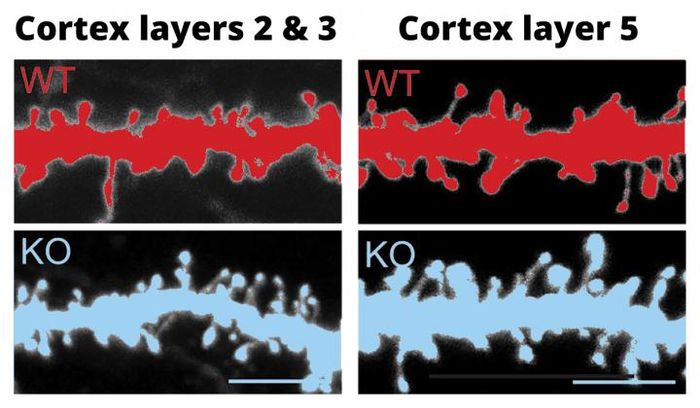
The scientists also confirmed that preschool-aged kids with ASD had significantly lower levels of FABP4 than children without ASD in two other groups of children. This suggests that at the right age – 4 to 6 – FABP4 levels can serve as an ASD biomarker. Compared to wild-type mice, the mice with low FABP4 levels also had behavioral problems that caused difficulty with spatial learning and memory, as seen in some ASD patients.
“The identification of FABP4 as a biomarker that can detect ASD in four- to six-year-old children is good news,” said Maekawa, “especially because early diagnosis and intervention can lead to better long-term prognosis.”
After additional analysis of post-mortem brains, the researchers found that in older children with ASD, FABP4 levels are the same as those without ASD. Thus, the amount of FABP4 appears to be too low in children with ASD at a very specific period in development. It might, therefore, not only be a biomarker, it may play a role in disease development.
The RIKEN team, led by Takeo Yoshikawa, plans to continue this work in both patients and their mouse model.
“We hope to replicate our findings in a larger group, which will allow us to determine whether specific ASD symptoms or their severity are related to low levels of FABP4,” noted Maekawa. “We also hope to conduct a prospective cohort study of newborns to determine if FABP4 levels at birth can predict the future manifestation of ASD.”
Sources: AAAS/Eurekalert! via RIKEN, Brain Communications
Reference:
“Autism Spectrum Disorder Biomarker Is Discovered.” LabRoots, 15 Sept. 2020, http://www.labroots.com/trending/cell-and-molecular-biology/18687/autism-spectrum-disorder-biomarker-discovered. Accessed 26 Sept. 2020.
My thoughts:
I learned a new term throughout this article: Biomarker! Through a bit of research, I was able to learn that biomarker is basically a substance(usually a molecule) that indicates some kind of condition in the body, whether it may be an unusual condition or a normal one. I learned a new subject too, called the FABP4 molecule. As said in the article above, the levels of this FABP4 molecule is found to be lower in children of ages 4-6, so I was curious what exactly this FABP4 molecule is so the effects, like Autism, would make sense to why they were hapening.
Turns out, FABP4 stands for Fatty Acid Binding Protein 4, which is responsible for the production of the fatty acid binding protein found in adipocytes. Adipocytes are basically lipocytes and fat cells, which mainly make up the adipose tissue which helps store energy as fat. Adipose tissues are usually located under the skin, but they can also be found in the regions involving organs. By storing energy as fat, the adipose tissues help maintain homeostasis of the body and also protect the body from harsh temperatures.
Anyways, sorry I got off track there while I fell into the research void of adipocytes. The section of the article that really caught my interest was when the article mentioned how the adipokine molecules affect brain health. I did some more research, and I realized that “adipose tissue produces adipokines that inform the brain about whole-body long-term energy-storage status, and the tissue drives the brain’s control of energy balance and the long-term regulation of body weight.” (https://www.ncbi.nlm.nih.gov/pmc/articles/PMC3424454/#:~:text=Adipose%20tissue%20not%20only%20dynamically,term%20regulation%20of%20body%20weight.)
So, I made a hypothetical conclusion to why Autism patients are diagnosed with Autism. First of all, maybe since the FABP4 molecules are in charge of storing energy(fat –> broken down glucose –> energy!), lower FABP4 molecules may lead to less energy –> often breakouts by the patients. Additionally, a few other research websites state that Autism may lead to obesity. I am guessing that obesity is a possible result from Autism because Adiposa is responsible for the control of body weight, so by having less FABP4 molecules(Adipose tissues), the body would be in a less constant, homeostasis-like condition, therefore continuous weight gain and eventually obesity.
Sorry for posting behind schedule everyone! Don’t forget to be happy 🙂
-Joanna Kim, September 27th, 2020, 2:17 AM KST
 Biochemistry Science Blog!