Just recently on January 1rst, the United States Department of Agriculture released new regulations regarding the labeling standard for genetically engineered food — “GMO”s to “bioengineered” or “derived from bioengineering” will be the new labels placed on foods that have been genetically modified in artificial ways.
This change has taken several years in implementing. The initiative began in 2016, when the U.S. Congress signed a law to establish a national benchmark for the labels for GMO foods to teach people about the foods they consume and standardize such labels across the nation.
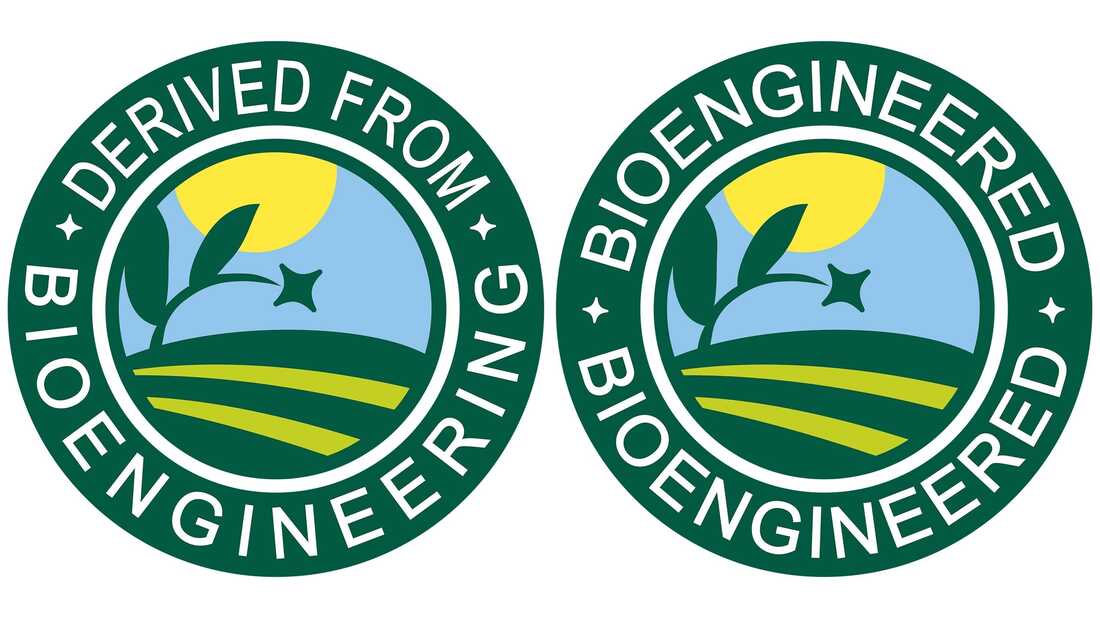
Photo Credits: U.S. Department of Agriculture
“The National Bioengineered Food Disclosure Standard increases the transparency of our nation’s food system, establishing guidelines for regulated entities on when and how to disclose bioengineered ingredients,” said Sonny Perdue, who served as agriculture secretary during the Trump administration. “This ensures clear information and labeling consistency for consumers about the ingredients in their food.”
The new law is applicable to genetically modified foods as well as foods with genetically modified ingredients that are “detectable” by a few conditions. Some commonly bioengineered foods include corn, canola, soybeans and sugar beets, and whilst most GMO crops are utilized in creating animal feed, according to the Food and Drug Administration, they are also used into constituting the ingredients that are often found in human diets, such as cornstarch, corn syrup, canola oil and granulated sugar.
There are several ways through which companies with bioengineered-qualified products can comply with the new regulations:
- Including text on food packages with the label “bioengineered food” or “contains a bioengineered food ingredient.” The two logos approved by the USDA (in the picture above) may also be used.
- Including a scannable QR code/ phone number to text to provide more information about the food product.
Numerous criticisms exist regarding the new rules, that the new labeling will only increase confusion within citizens as to what actually are included in the bioengineered foods. Furthermore, there are also criticisms regarding the confusing similarity of the two logos and the limited extent to which the new rules may be applied to. An advocacy group even sued the USDA to try to stop the new regulations taking effect, arguing that doing so harm companies’ transparency with their customers regarding the ingredients in their products.
Evidence proving that genetically modified crops are harmful to human health has yet not been found, yet according to the National Academy of Sciences and the World Health Organization, advocates say people still deserve to know what they’re eating.
“These regulations are not about informing the public but rather designed to allow corporations to hide their use of genetically engineered ingredients from their customers,” Andrew Kimbrell, executive director of the Center for Food Safety, said in a statement.
Furthermore, the new regulation is discriminatory against the poor, the elderly, people who live in rural areas and minorities who may lack an electrical device, specifically a phone, to gain access to the internet, the advocacy group said.
Despite the criticism, groups such as the American Soybean Association and the National Corn Growers Association actually have lauded the new regulation when it was announced in 2018 because it helped increase transparency within the food industry.
Works Cited:
Hernandez, Joe. “GMO Is Out, ‘Bioengineered’ Is In, as New U.S. Food Labeling Rules Take Effect.” NPR.org, 5 Jan. 2022, http://www.npr.org/2022/01/05/1070212871/usda-bioengineered-food-label-gmo. Accessed 11 Feb. 2022.
________________________________________________________________________
Personal opinion:
I’m glad that the new standards are getting implemented in the societies we live in today, starting from the US. It is extremely important that we have transparency with the customers regarding the ingredients inside the products, and I am fond of the idea of including a QR code that one can scan with their phone to look into the ingredients included in the food product.
I am surprised that there still exists skepticism concerning the effect of consumption of bioengineered foods, despite GMO crops just being genetically modified for agricultural uses, like a more realistic, feasible version of Darwin’s theory of natural selection.
This is actually related to a research project that I’m starting, whereby I will be drawing books for young children to raise awareness of the positive and safe ways that CRISPR, or genetic engineering overall, can benefit our lives.
– Joanna Kim, February 11, 2022, 9:09PM KST –
 Biochemistry Science Blog!