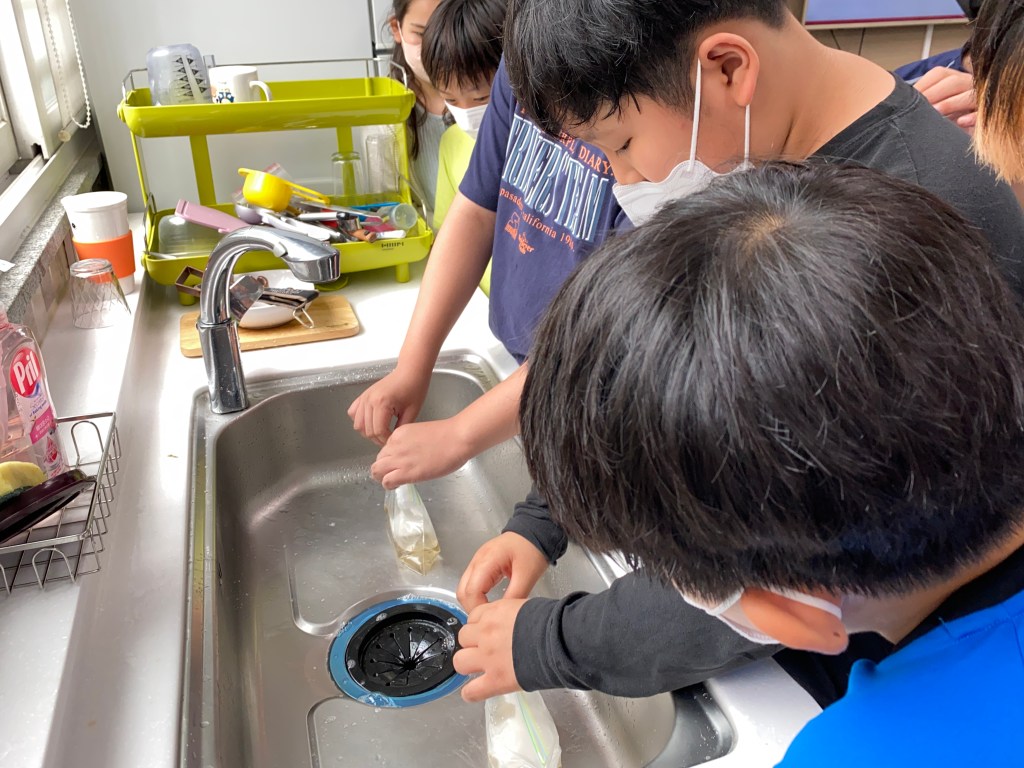
Fourth day of summer camp! Today’s lesson was supposed to be focused on a real biodegradation observation, whereby students create their own compost bins, but due to a personal mistake *ahem* of forgetting to remind them to bring their own food waste today, the lesson plan was switched last minute to..
EXPLODING SANDWICH BAGS!
Some of the kids, when they stepped into the room, began complaining that they had already done this experiment before. However, they were still fascinated when I explained to them the scientific principles behind this reaction in AP Chemistry terminology, explaining acid/base concepts and showing them the chemical reaction equation for this reaction.
Thankfully, they knew examples of acids/bases in our daily lives. One kid in particular, Chris, mentioned battery acid and nitric acid, which I was very surprised for an Elementary student to know. Another student, Antony, brought up citric acid, which again, I was surprised he’d know the scientific name for lemon juice.
The equation for this chemical reaction is as follows:
NaHCO₃ (s)+ CH₃COOH (aq) –> CO2 (g) + H2O (l) + Na+(aq) + CH₃COO–(aq)
When I explained to them that sodium bicarbonate was baking soda and the convuluted CH₃COOH formula was vinegar, their eyes widened. (They’re so adorable)
Here are the materials:
- Baking Soda
- 1 Small zip-lock bag
- Vinegar
- Measuring cup
- Warm water
- tissue
Contrary to my perception that this experiment would be obvious and very easy, there were a few hardships throughout the experiment:
- I failed to consider the factor of the students being young Elementary students. Many of the students struggled to lift the heavy jar of warm water and spilled some on the table. However, as they were unaware of the baking soda-filled tissue pouches next to their zip lock bags, the spilled water melted the tissue, tearing up the pouches as baking soda spilled out of the bags.
- You actually had to shake the bag once you closed it so the bag does explode. The first few trials were unsuccessful in that we didn’t touch the bags after closing them, so the bags only inflated and did not explode. When we vigorously shook the bags after closing them at the last few trials, the baking soda fully mixed with the vinegar, so the reaction occurred more quickly and vigorously, resulting in explosions.
Here are the steps to creating these explosive ziplock bags.
- Separate the two layers of a paper towel. A singular piece of paper towel usually is bi-layered, so remove one layer.
- Pour 3 teaspoons of baking soda into the middle of one of the paper towel pieces.
- Seal the paper towel by gathering the four corners of the paper towel up to the middle, then squish the tissue so that it creates a pouch-like shape. Twist the bottom to secure no baking soda spills out of the pouch.
- Pour 1/4 cup warm water into a zip lock bag.
- Pour 1/2 cup vinegar into the same zip lock bag. Close the bag and gently shake to ensure homogeneity within water and vinegar.
- Place the bag in the sink. Slightly open it just enough for the paper tissue pouch to fit in.
- Drop the paper tissue pouch into the zip lock bag, quickly seal the bag, and shake vigorously.
Here are some photos from today:
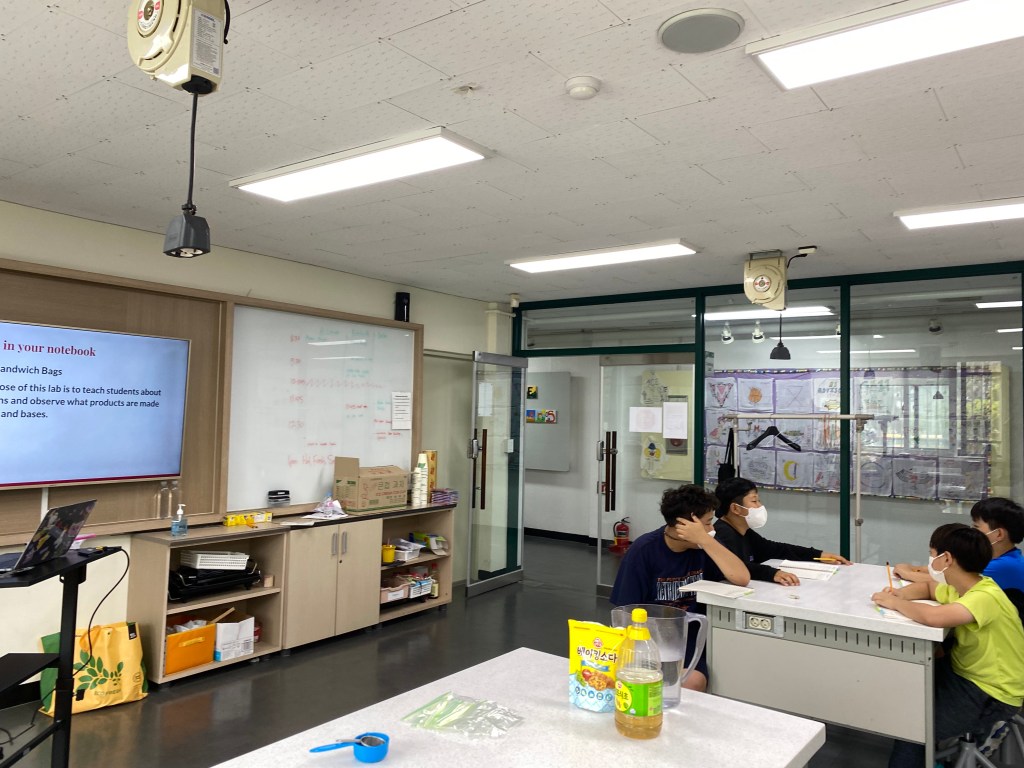
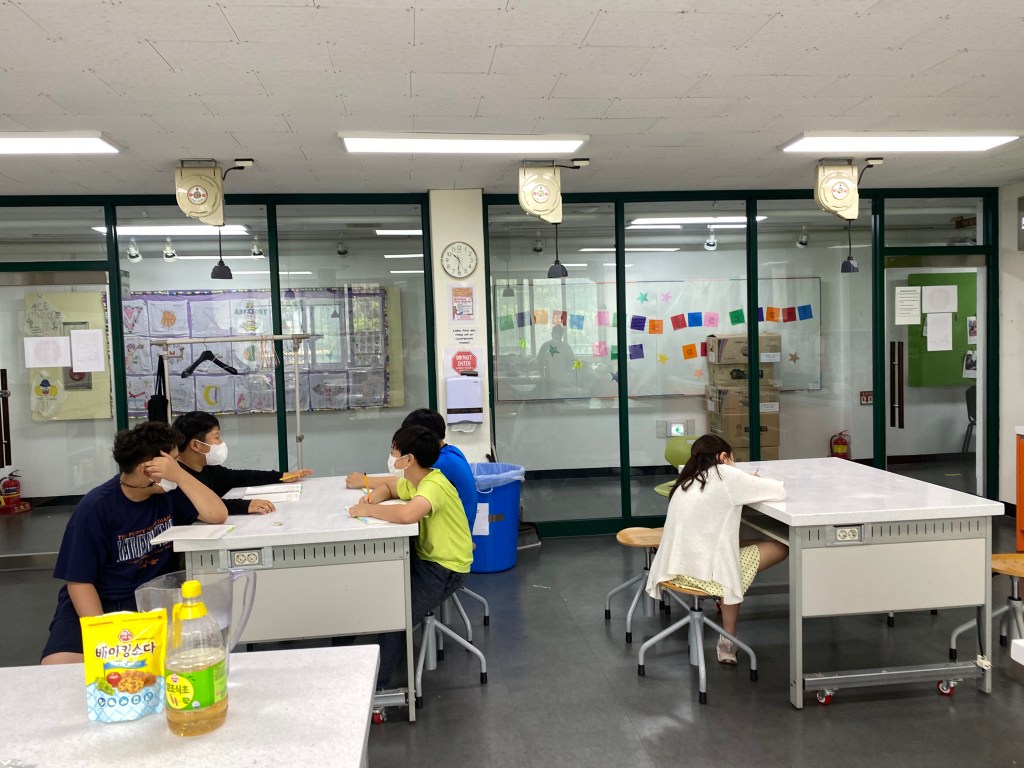
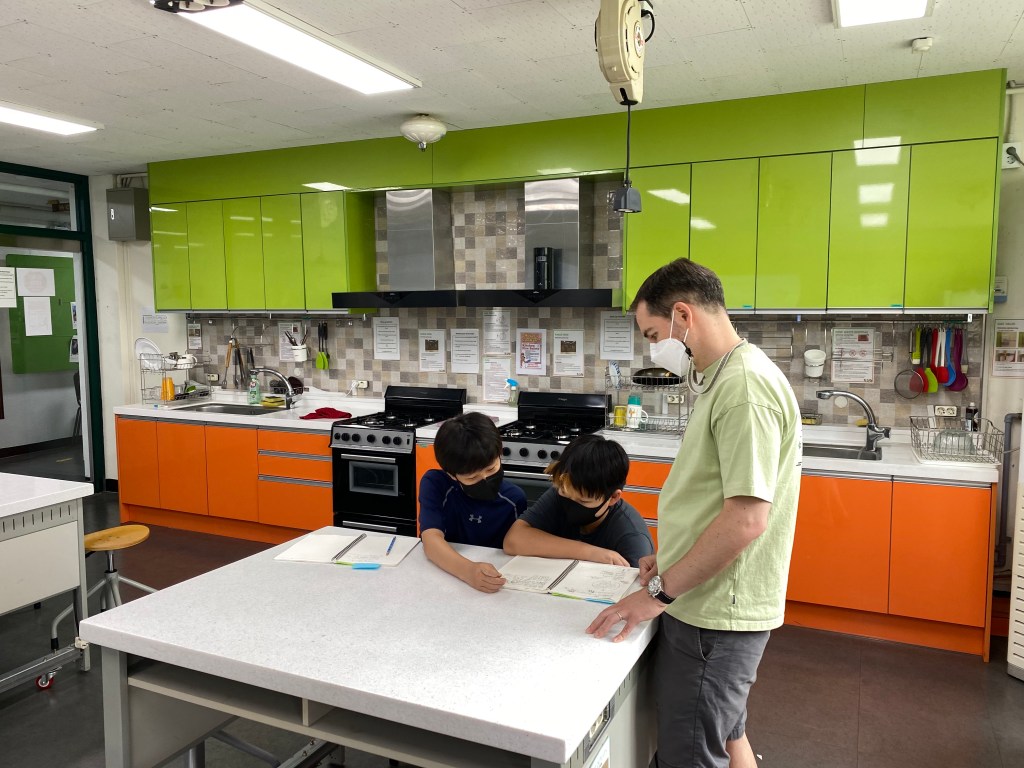
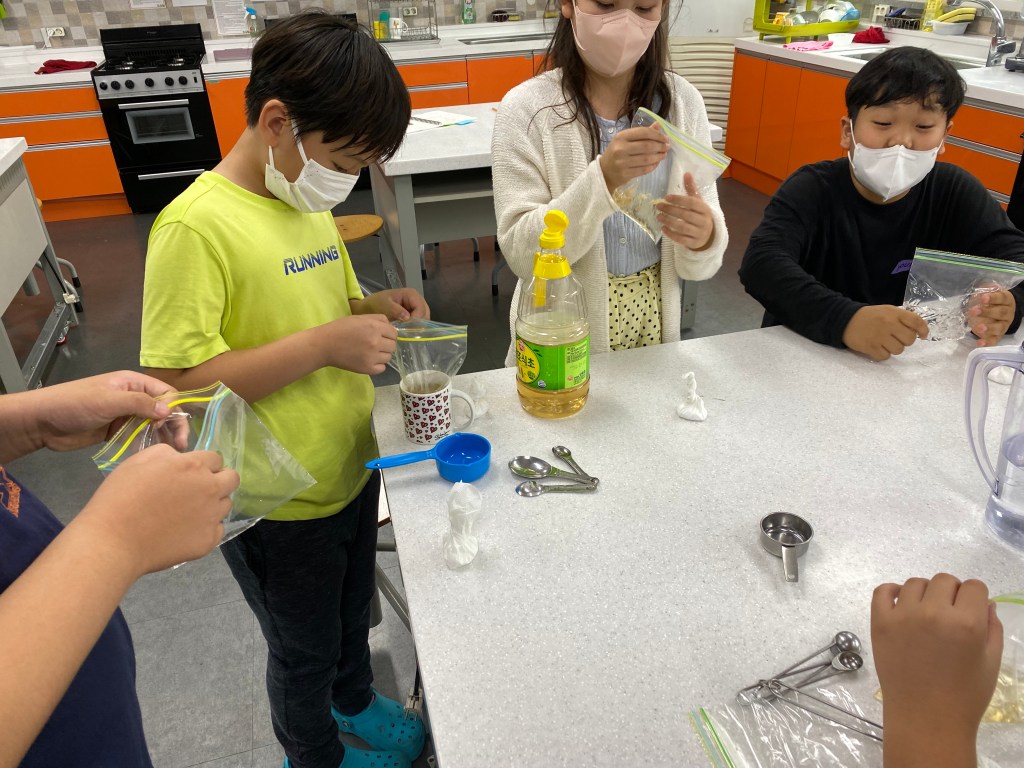
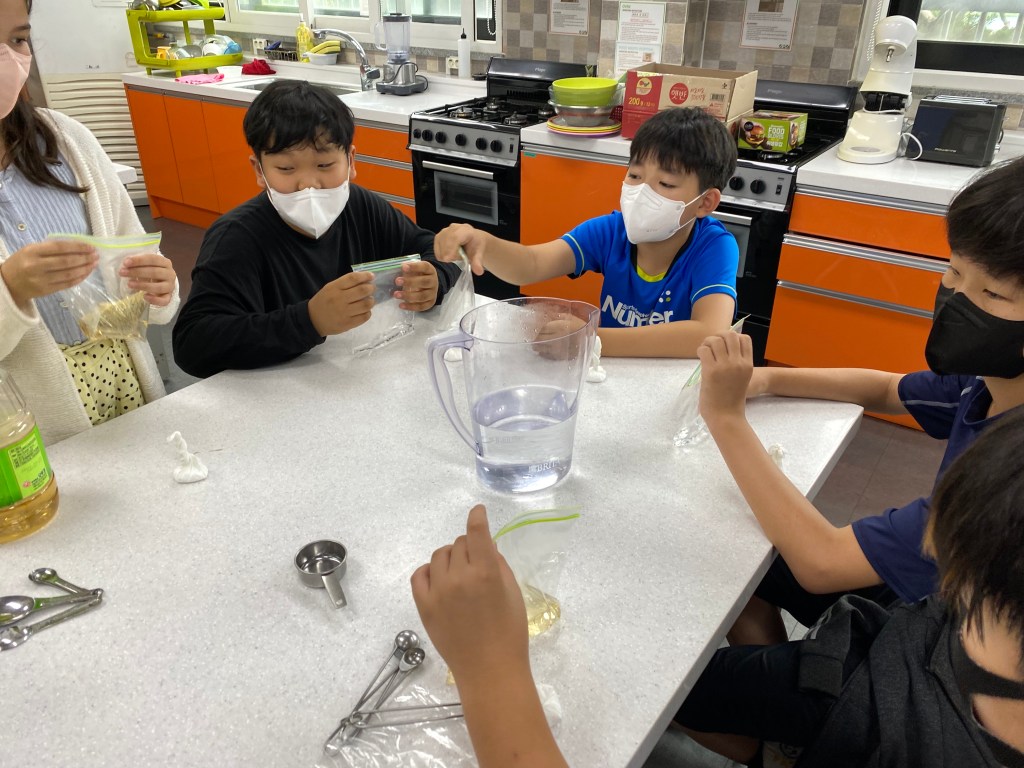
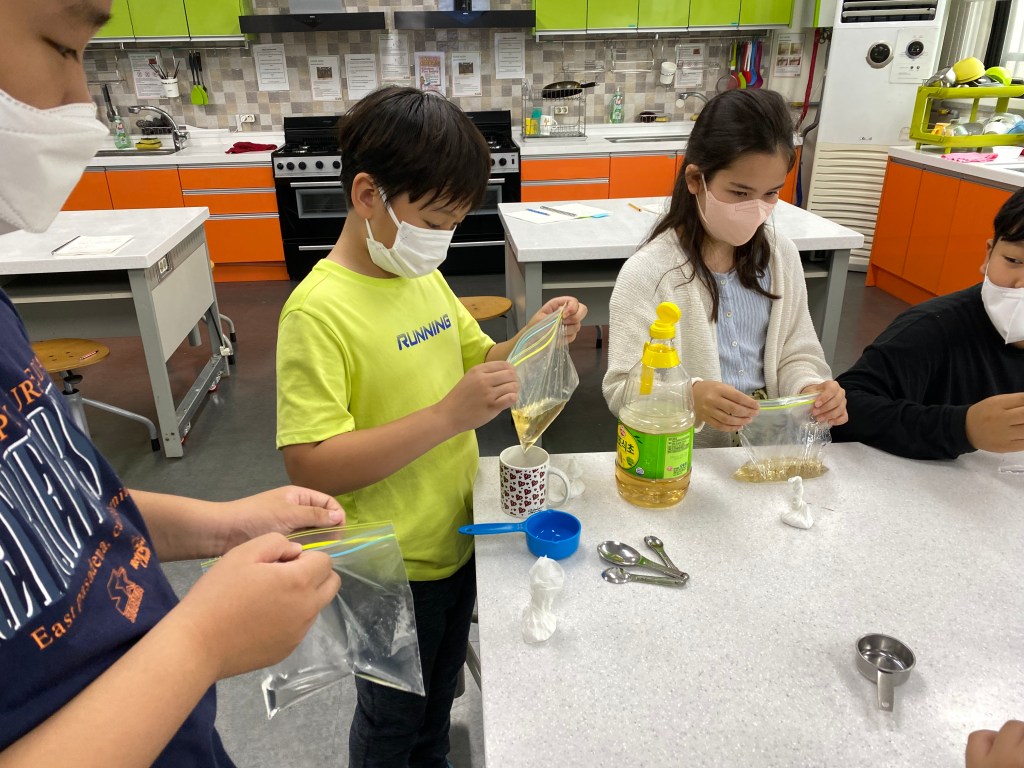
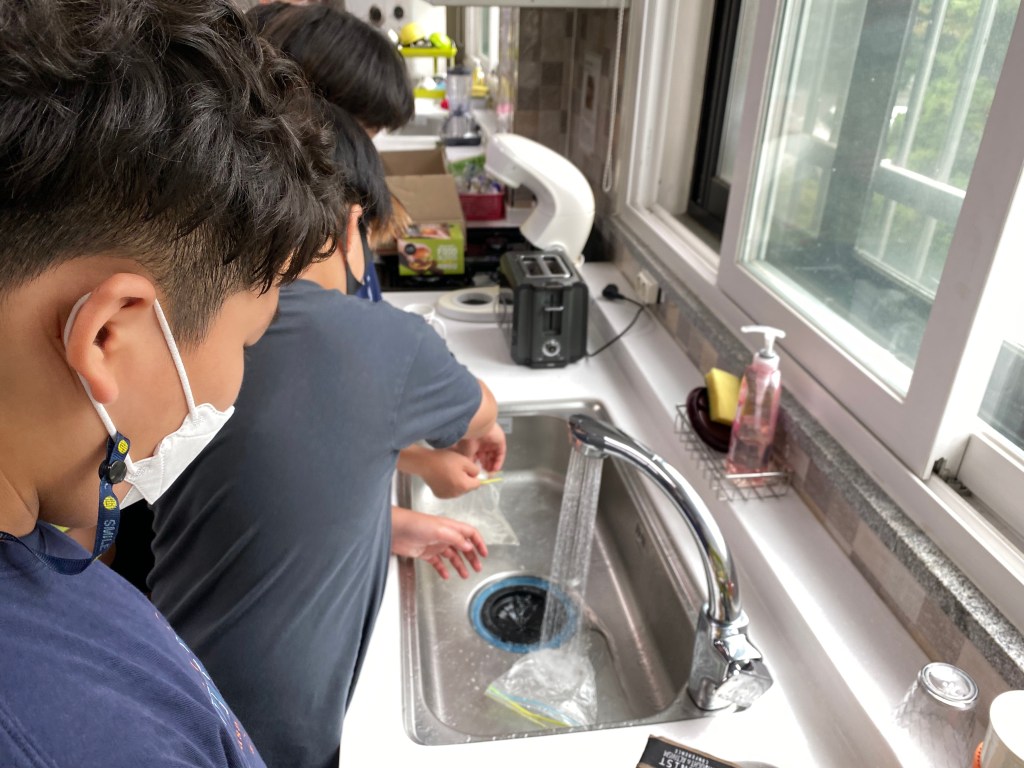
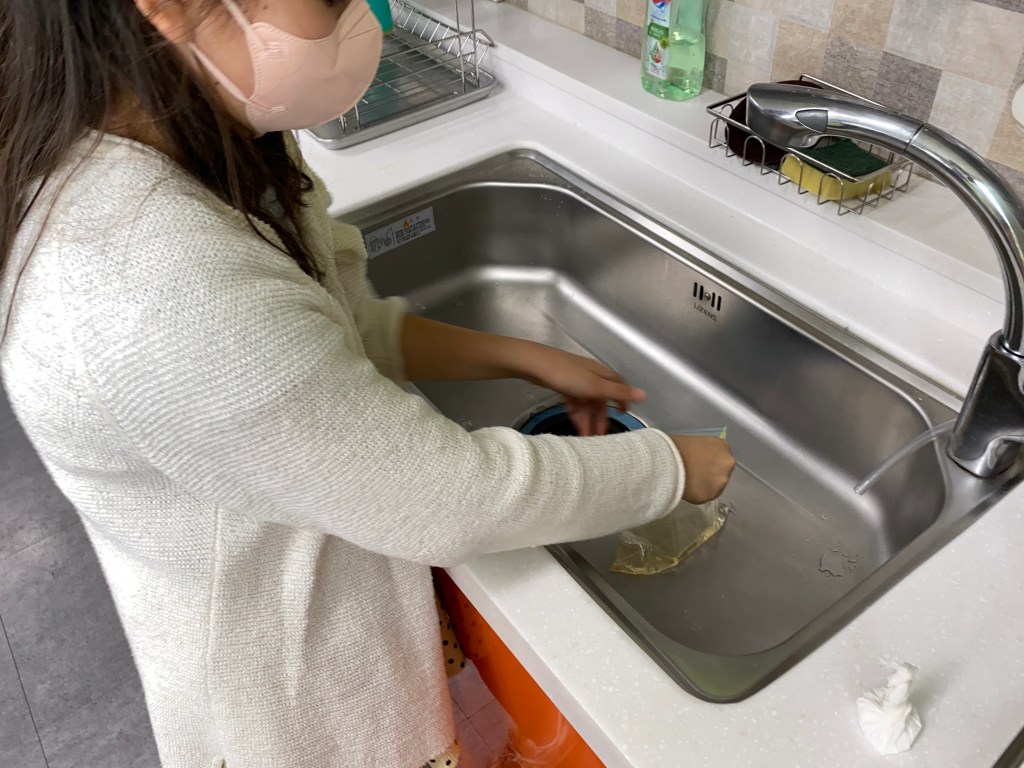
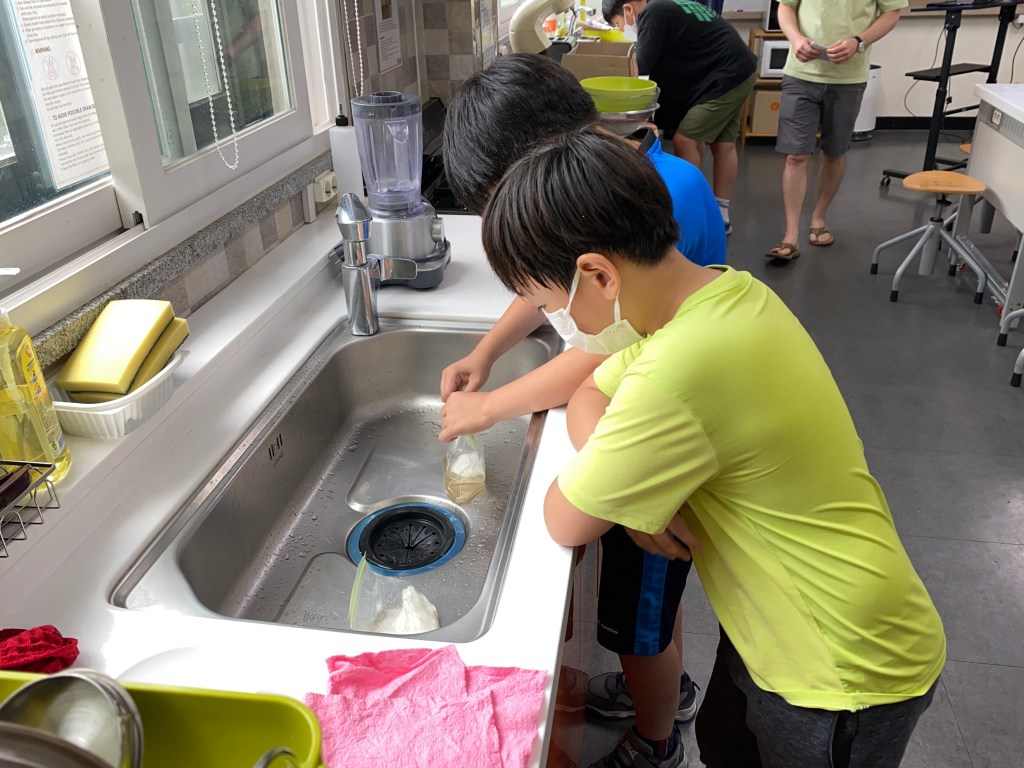
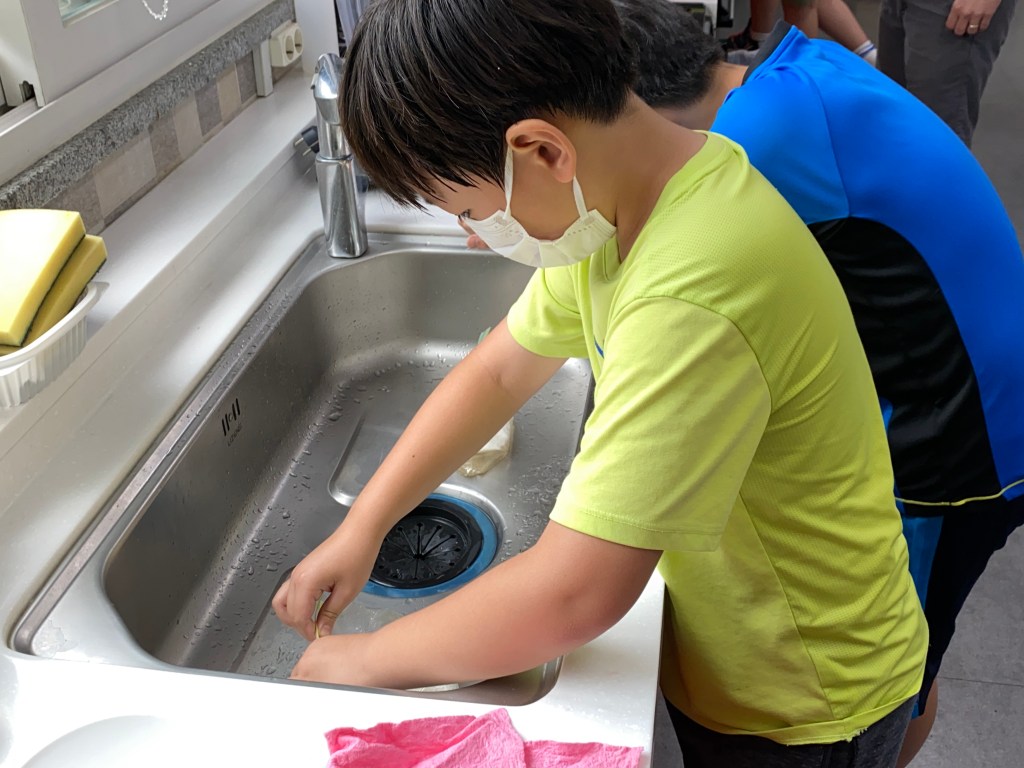
Oh! Also something really touching today was that while the kids were leaving the classroom for recess, I heard one of them telling their friends that today’s class was so fun. Many other students came up to me today as well, complimenting that science class is currently their MOST FAVORITE class ever!
– Joanna Kim, June 17th, 2022, 2:40AM KST –
 Biochemistry Science Blog!