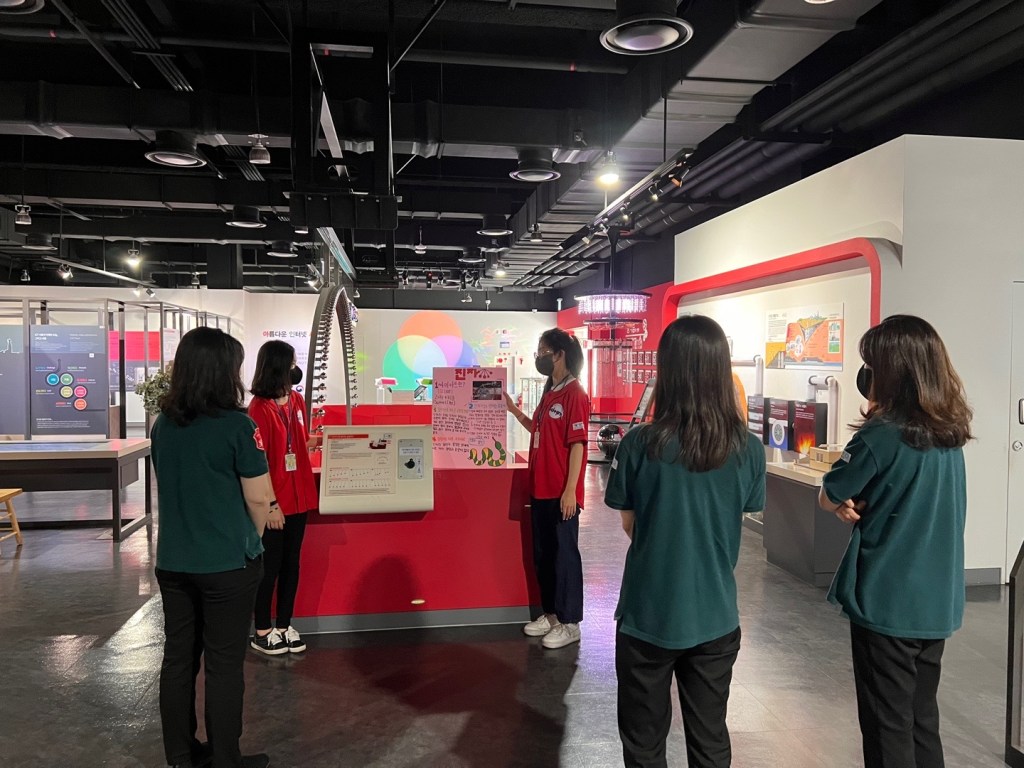
As a part of the Seoul Science Center staff, I explained the simple pendulum booth to visitors. The majority of visitors of Seoul Science Center (SSC) is young children and parents, though if lucky, there sometimes are groups of students from field trips. For this Saturday, I volunteered to explain the simple pendulum booth.
First, before proceeding to explain, we get trained of what the booth is intended to teach the audience about and the scientific concepts behind the booth. This booth, probably hinted by the name, is on a simple pendulum machine. Metal balls are attached to strings of differing lengths, and when the machine is initiated, a wave motion occurs within the machine. As the lengths of the strings with which the balls are attached to all differ in length (decreasingly, increasingly), the motion of the entire machine is similar to that of a snake initially. However, as the time taken to complete one full swing is based on the length of the string, the uniform wave motion eventually became more convoluted, and later on, reminded me of the double-helix shape of DNA.
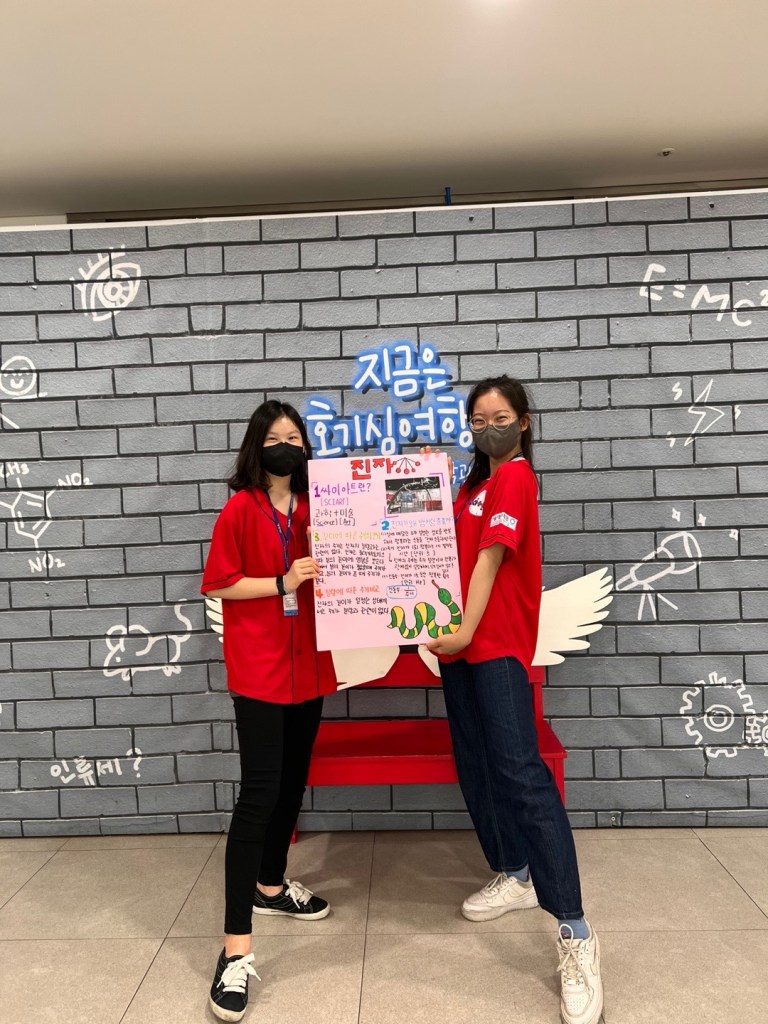
For visitors to easily understand the scientific principles behind this booth, we created a panel with the scientific explanation, a diagram of the motion, and the purpose of the booth itself.
As this was a Saturday morning, there were very few visitors. We asked about 4 people if they wanted to listen to our explanation, and we actually got rejected a few times. However, we still tried our best to explain to the other visitors who wanted to listen to our explanations!
Here are some photos:
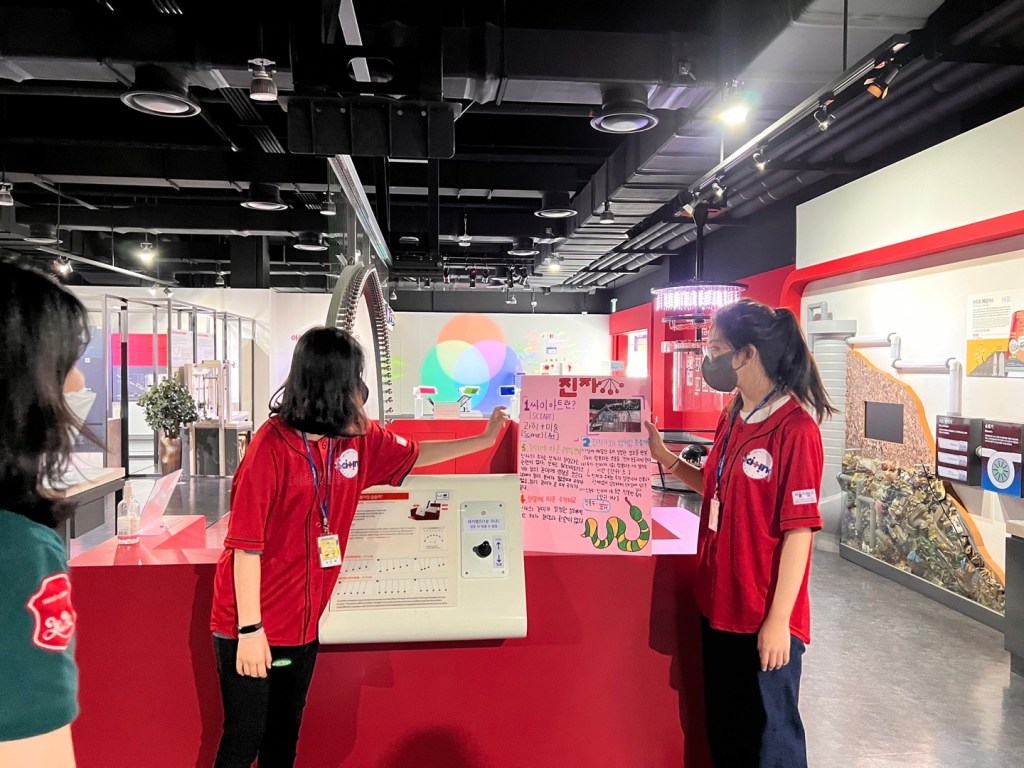
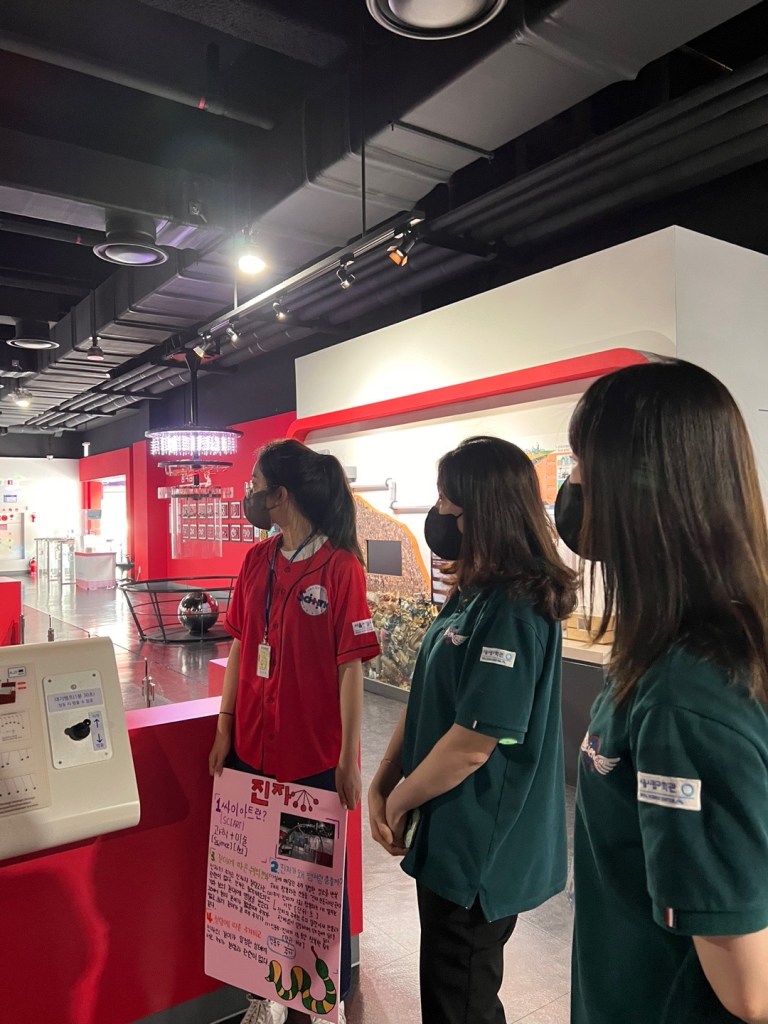
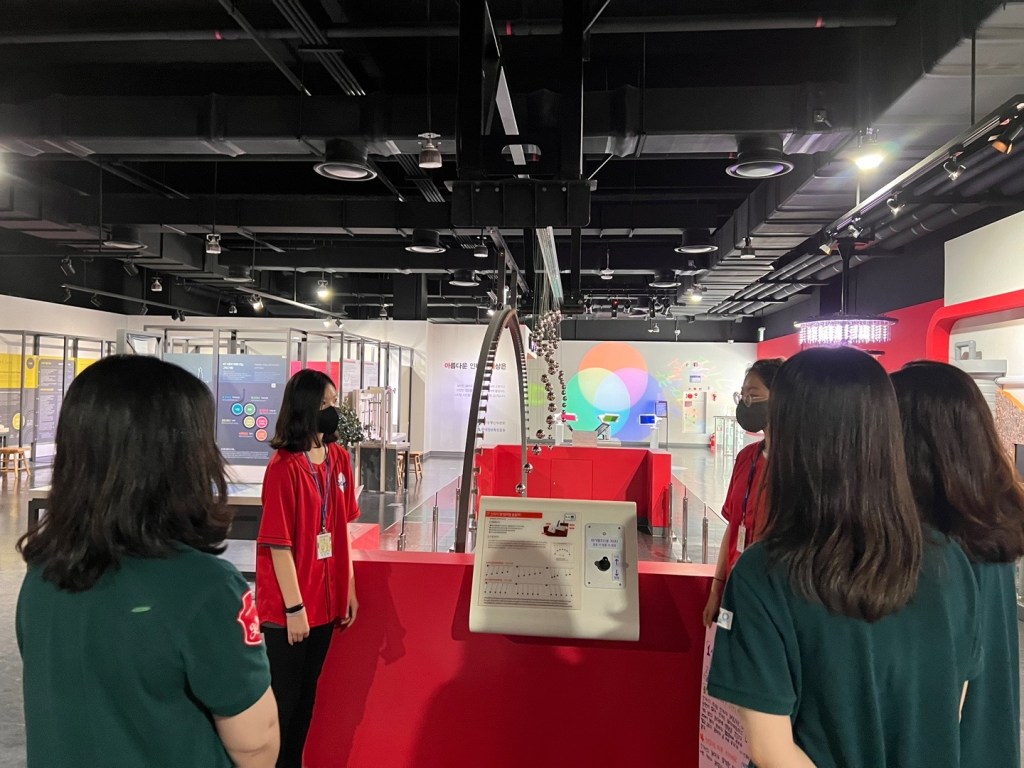
I actually never really knew that the length of the string was the sole contributor to the different timings of the pendulum motion (under the circumstance that the strings were attached to the same location as the other strings). I thought that the masses of the balls would affect the motion as well, but I was wrong — the lengths of the strings affect the times taken to complete a full swing, and thus, resulting in the wavy motion of the simple pendulum machine.
Shortly after this session, I attended a seminar held at the Seoul Science Center (again) by this company named ThermoFisher. ThermoFisher is a company that produces and sells scientific instruments and consumables. Some of the educational branch employees came to teach us about the usage of PCR machines and how we can use them to determine certain genetic traits.
During this session, we tested our traits for our susceptibility to hair loss and genetic ability of caffeine metabolism. Of course, there are other factors that can affect these traits despite being given certain genetic characteristics. For example, we learned that even though we may innately possess thick, coarse hair, accumulated environmental stress factors, including but not limited to constant, tight hair tying habits, frequent hair perms/dyes, heat damage, may cause the hairs to thin, resulting in a higher susceptibility to hair loss than before.
We rubbed q-tips on the insides of our cheeks as if we were imitating brushing teeth, and then dipped the q-tip into a microcentrifuge tube filled with lysis buffer. The lysis buffer was supposed to serve the function of bursting open cells. Then, these microcentrifuge tubes were incubated in a heat block. We then added DNA Stabilizing Solution, and then placed the tubes in a centrifuge again.
To prepare the microcentrifuge tubes for our PCR test, we added a combination of solutions (TaqMan GTXpress Master Mix (2X), TaqMan Genotyping Assay (20X) and Nuclease-Free Water, which honestly, I don’t know the function/purpose of them (all materials/ingredients were provided by the company, some of which the company omitted explanation on their purpose/function). During this procedure, I learned about a new instrument called a vortex mixer, that vibrates and churns the solution inside the tubes at a very high speed when applied pressure. This was quite cool, considering how the teachers told us to “vortex” the solutions, and “vortex”, in real life, usually is synonymous to a whirlpool, so the name of the instrument matched its functionality. We then placed this into the PCR machine, and analyzed our results.
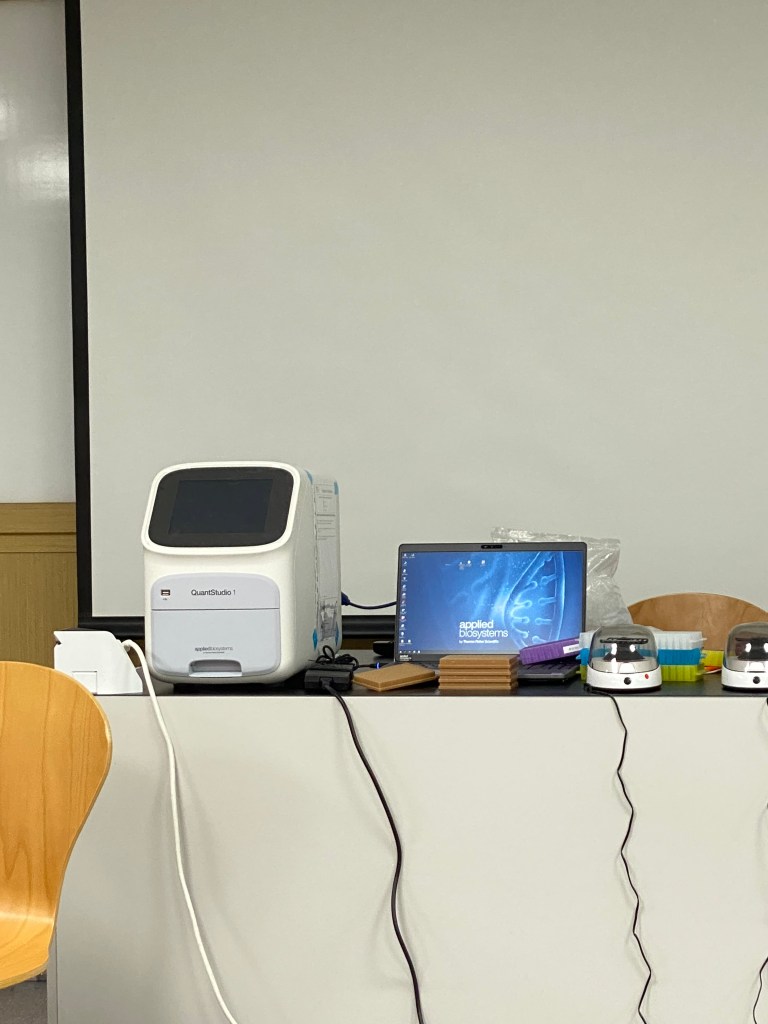
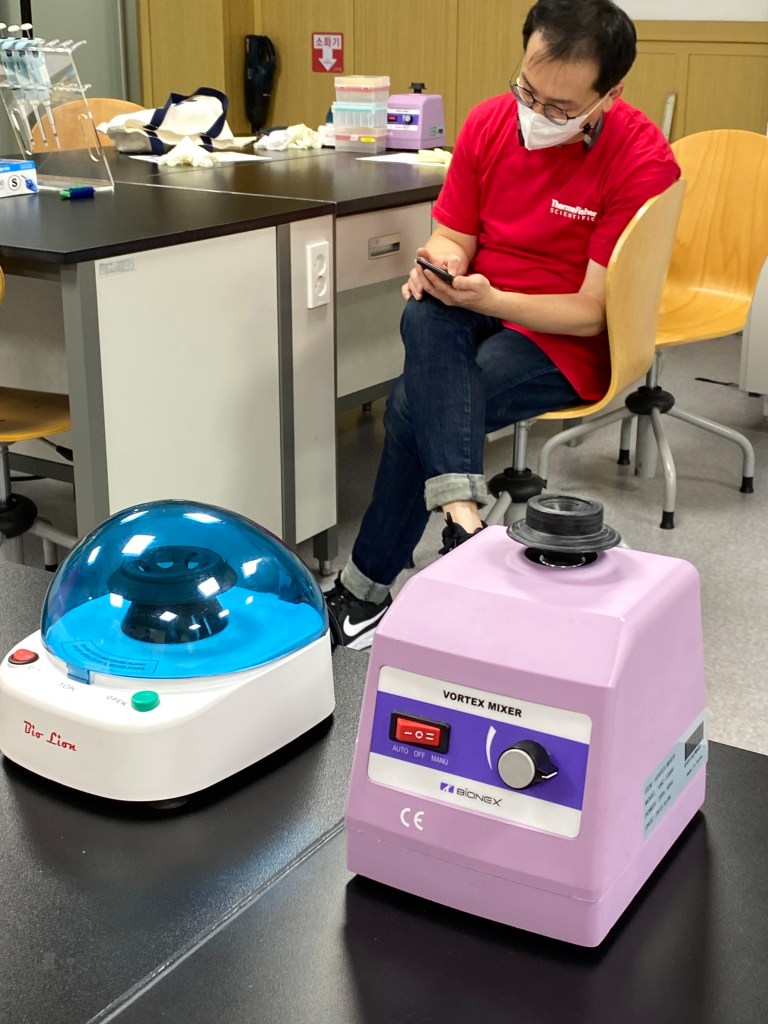
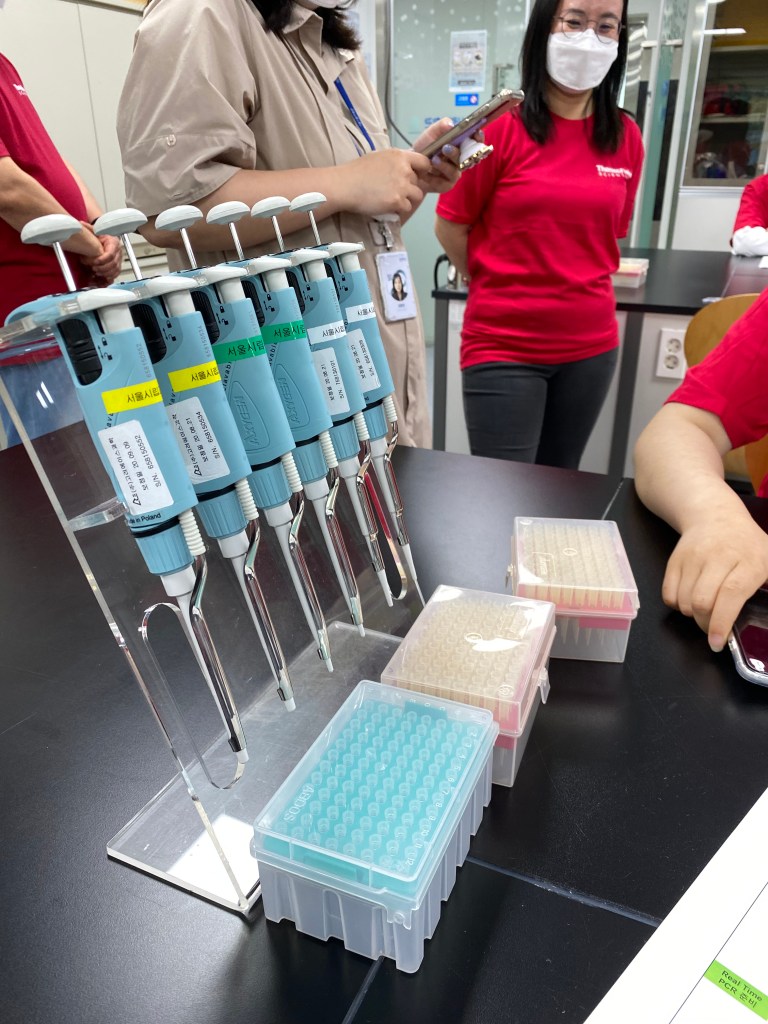
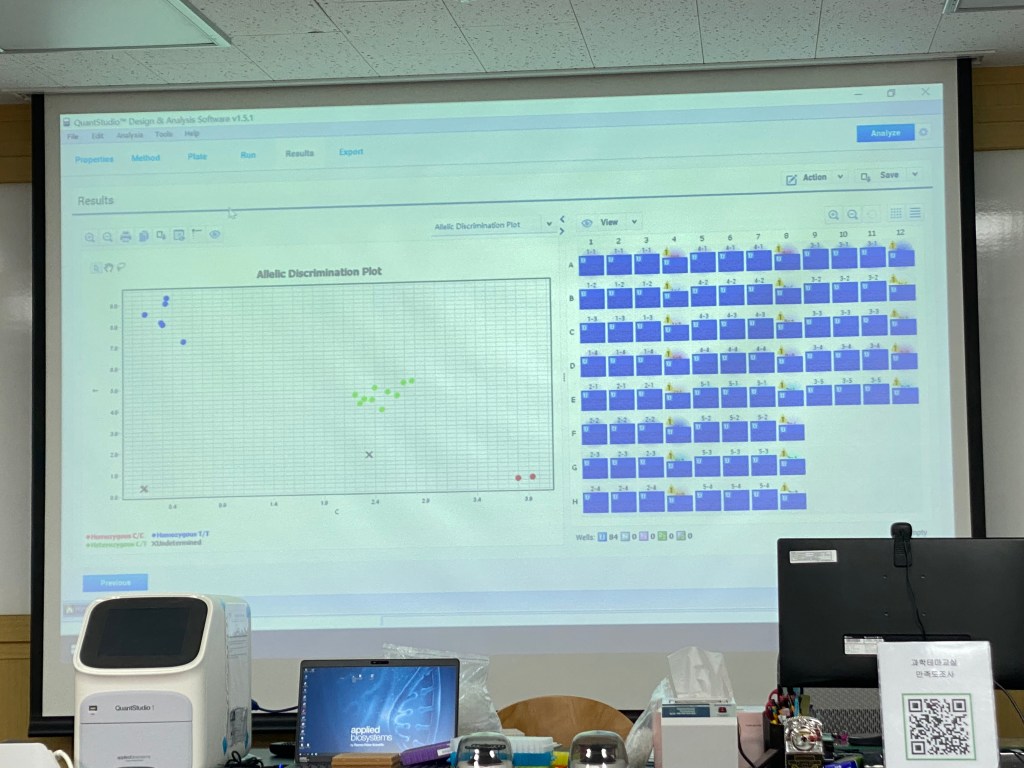
Though it was entertaining to see my genetic analysis for my susceptibility to hair loss and my metabolism rate to caffeine, I think the most fascinating part of this session was learning the new instruments and conducting the experiment itself. I made a few friends during the session, who had never experienced using microcentrifuge tubes and the single channel pipettes, so watching their reactions reminded me of my first-hand experiences during my freshman summer break and the work I did during sophomore year with my Biology teacher for the CRISPR experiment with DH5a E.Coli bacteria.
Psst. I didn’t know PCR test machines were THAT costly!! (I asked one of the teachers there about it and they laughed at my reaction; I really didn’t know they were REALLY expensive. Huh, no wonder it takes a lot of funding and time/patience to innovate a revolutionary biomedical instrument.)
– Joanna Kim, June 21rst, 2022, 5:39 PM KST –
 Biochemistry Science Blog!